Radar Detector v Loop Detector – which is better?
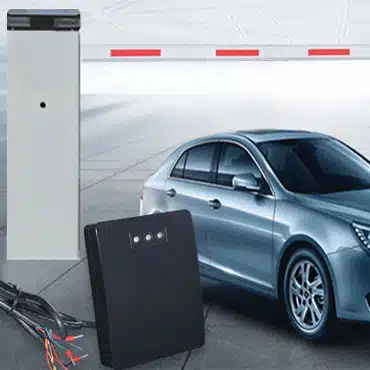
The choice between radar detectors and loop detectors greatly depends on the specific requirements of the application, cost considerations and the desired level of accuracy and reliability.
This article highlights the differences between the two technologies in the context of automatic boom gate safety installation. Both radar detectors and loop detectors can be used for vehicle detection, but the technology used operates differently on each device and each with Pros and Cons.

How the different boom gate safety technologies work
Radar Detector – radio waves
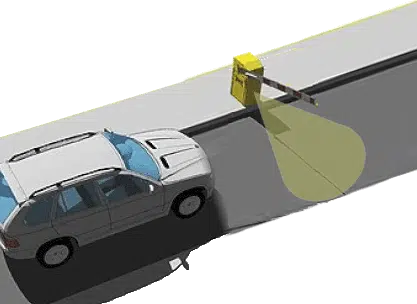
Rotech’s RD6 Radar Detector consists of a radar transmitter, receiver and antenna in one small unit. The radar unit emits radio waves which detect the reflection of these waves off any object (motor vehicle and people) approaching the boom gate.
By integrating the RD6 radar detector with the boom gate control system you can automate the opening and closing of the boom barrier based on the presence or absence of vehicles.
If a vehicle is detected approaching the boom gate, the control mechanism activates the motor to raise the boom gate barrier to allow the vehicle to pass. When the vehicle or pedestrian has exited the detection area the control mechanism lowers the boom gate barrier to restrict access.
Loop Detector – electromagnetic device
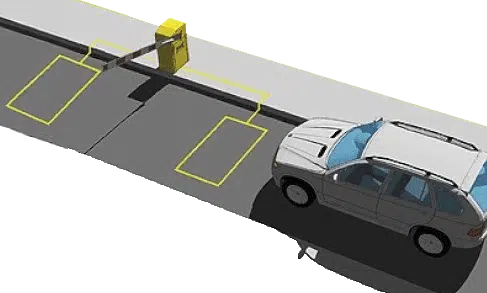
Rotech offers a wide range of different types of loop detectors that operate similarly but can be fitted in different ways (11-pin or flat pack for confined spaces and rail mount). A loop detector consists of loops of wire embedded in the pavement near the boom gate barrier that generates an electromagnetic field. When a vehicle passes over the loop, it disrupts the electromagnetic field, triggering the detection of the vehicle.
When the signal processing unit determines the presence, size and speed of the vehicle the automatic boom gate control mechanism activates the motor to raise the boom gate to allow the vehicle to pass.
When the vehicle passes over a second set of loop detectors on the exit side it triggers the gate controller to lower the barrier gate. In summary, both radar detectors and loop detectors have their strengths and weaknesses when it comes to detecting vehicles for controlling an automatic boom gate – which one to use depends on the environment in which it is installed.
Competitively priced, all our gate safety equipment solutions comply with international standards. For reliable accurate detection select from our extensive range of loop detectors and logics, vehicle detectors, safety beams, and safety light curtains to secure your gate or entrance.
FAQs
What is the main difference between radar detectors and loop detectors?
• A radar detector uses radio waves to detect the reflection from moving or stationary objects (vehicles or people) approaching a barrier such as a boom gate.
• A loop detector (also known as an inductive loop detector) is embedded in the pavement and creates an electromagnetic field which is disrupted by a vehicle passing over it, triggering detection.
Radar detectors are much easier to install than loop detectors because they mount above ground and do not require cutting into the road surface, making them ideal for temporary or dirt/gravel roads. Loop detectors require slots cut into the pavement for the loop wires, which can be time-consuming and costly.
Radar detectors can reduce installation costs because they eliminate the need for road cutting and sealing. Loop detectors may have a lower unit cost but involve higher installation expenses due to civil works.
Yes. Loop detectors provide highly reliable vehicle detection and are less affected by environmental factors like rain or dust. They are widely used for permanent installations in parking lots, boom gates, and traffic control systems.
Modern loop detectors, such as the LD100 and LD200 series, feature high noise immunity and multiple sensitivity settings to prevent interference from external sources.
Models like the RD6 Radar Detector can detect vehicles up to 6 meters, while long-range options such as Ban50 Radar can reach up to 24 meters, making them suitable for boom gates and large entry points.
The choice depends on multiple factors:
• Whether cutting pavement is feasible or disruptive
• Whether you need detections in areas where loops cannot be installed (ramps, uneven ground, gravels)
• The level of accuracy needed and nature of traffic (vehicles only vs mixed with pedestrians)
• Budget and long-term maintenance considerations
• Permanent vs temporary setup Contact Rotech for expert advice and tailored recommendations.
• What is the ground condition (pavement, gravel, ramp)?
• Are there any obstacles or underground services that prevent loop embedding?
• Is pedestrian traffic also present near the gate (so radar may help detect non-vehicle objects)?
• What is the maintenance history/costs for similar installations?
• What is the expected life span and reliability of the detection system under the local conditions?
• Will the detector integrate smoothly with the barrier/boom gate control system?
Contact us to discuss whether a radar detector or loop detector is best suited to your application for safe, reliable security around an automatic boom gate.